For an asset manager and financial institutions, a central part of the tokenization decision is where to structure and distribute the product. The choice of jurisdiction affects how the instrument is regulated, how counterparties assess it, and how easily it can reach institutional investors over a multi‑year program.
Singapore has become a leading jurisdiction for tokenizing real world assets (RWAs). Franklin Templeton launched its tokenized money‑market fund for Singapore investors with MAS approval, while issuers such as Galactica, GetSolar, and Matrixdock have brought tokenized maritime finance, solar financing, gold, and Treasury exposure to market through Singapore‑based, MAS‑regulated infrastructure. This article looks at why so many of those decisions are resolving in Singapore’s favour.
MAS Has Made Tokenization a National Priority
Singapore has spent two decades building one of the most trusted financial centres in the world. It ranks fourth in the 2026 Global Financial Centres Index and stands among the top financial hubs in Asia. That reputation rests on the qualities institutions value most in a place to do business: regulatory clarity, political and legal stability, and a regulator that is both demanding and pragmatic.
When a new technology such as tokenization emerges, those same qualities shape how the framework is built and applied in practice. Regulators are taking different approaches to tokenization. Some are adapting existing securities frameworks, while others are introducing dedicated digital‑asset rules, pilots, or sandboxes. Singapore’s approach combines existing capital‑markets regulation with industry‑led experimentation and the development of supporting market infrastructure. This places tokenization within the financial system rather than treating it as a separate technology category.
At the 2025 Singapore FinTech Festival, MAS Managing Director Chia Der Jiun has framed tokenization and AI as the two themes that will define the next decade of finance, a position we examined in Singapore: Shaping the Next Decade of Finance Through Asset Tokenization.
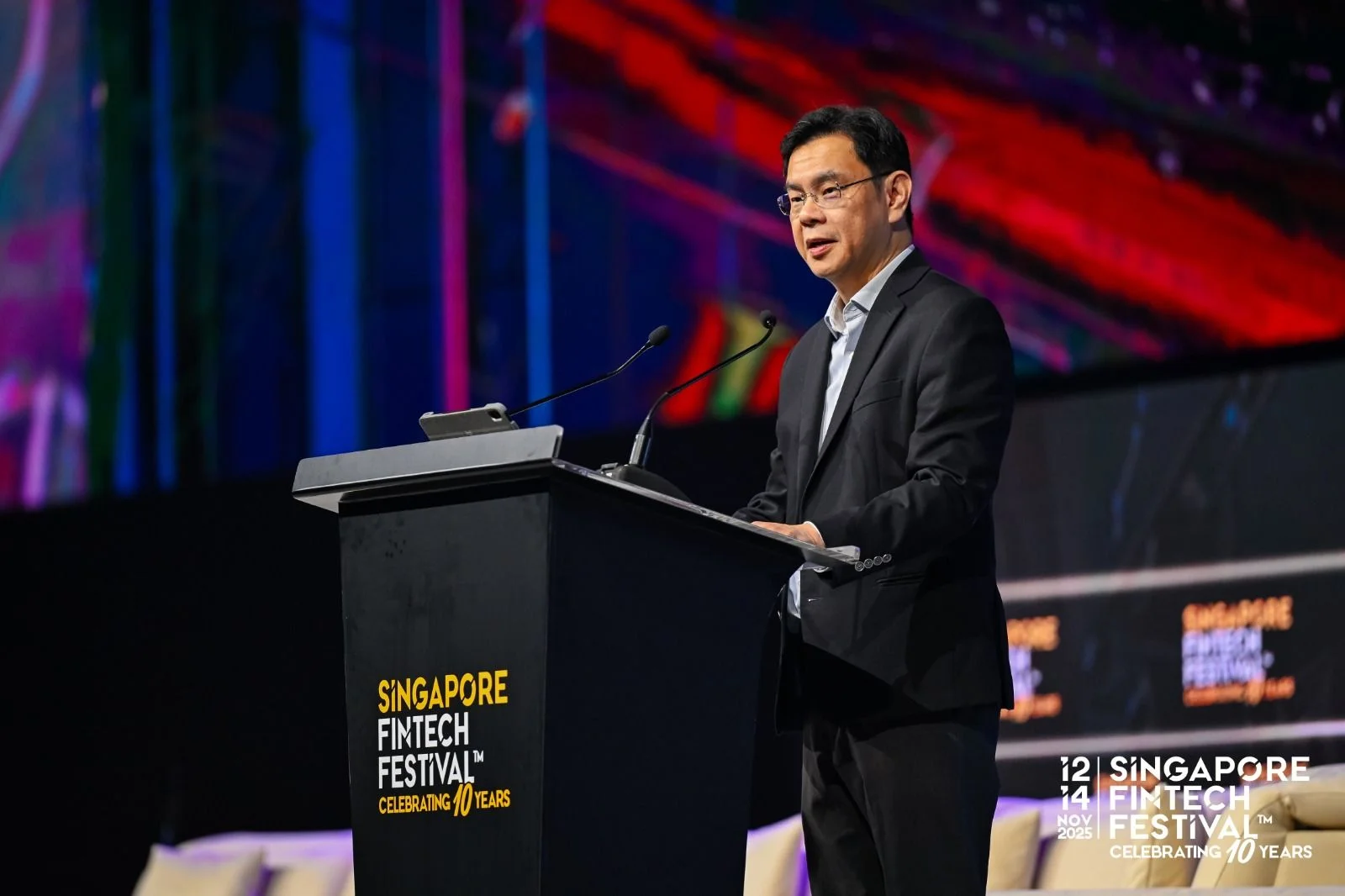
That direction is now being supported by a new institutional structure. On 25 June 2026, MAS announced the Future of Finance Institute at the Association of Banks in Singapore Annual Dinner. The institute will initially focus on AI and tokenization and will connect financial institutions, technology firms, researchers, and other market participants. Its planned functions include a knowledge hub, an innovation garage, industry sandboxes, and implementation toolkits. The launch of the Future of Finance Institute signals that MAS is moving from individual initiatives such as Project Guardian, Global Layer 1 (GL1), and BLOOM toward a more coordinated mechanism for industry adoption.
This matters for an issuer considering a tokenization program that may operate over several years. It does not eliminate regulatory or execution risk, but it provides a more predictable basis for planning, engaging with counterparties, and assessing how a product may fit within Singapore’s evolving financial‑market infrastructure.
How Singapore Compares To Other Tokenization Hubs
A question institutions may ask when choosing where to structure a tokenized asset is “which jurisdiction makes a multi‑year program easier to run in practice?” Several jurisdictions now offer tokenization frameworks, but they differ in how integrated and predictable they are for live issuance and distribution.
In many jurisdictions, tokenization sits in a patchwork of rules: some instruments are treated under existing securities law, others under newer digital‑asset regimes, and still others in supervisory sandboxes or pilot programs that may not cover the full lifecycle. That can work for a one‑off issuance, but it often means legal teams must map each product to a different set of rules, and counterparties must assess whether a licence or approval in one segment covers the actual activity being conducted.
Singapore’s approach is narrower in scope but more integrated in practice. By applying a consistent “same activity, same risk, same regulatory outcome” principle across capital‑markets products, and by concentrating licensing and market infrastructure within a single, well‑established supervisory framework, it reduces the need to interpret multiple overlapping regimes. For a general counsel or head of digital assets, that means the legal analysis for a tokenized bond or fund unit is closer to the analysis for its conventional form, and the same MAS licences and compliance infrastructure can support issuance, distribution, and secondary trading rather than requiring separate approvals for each layer.
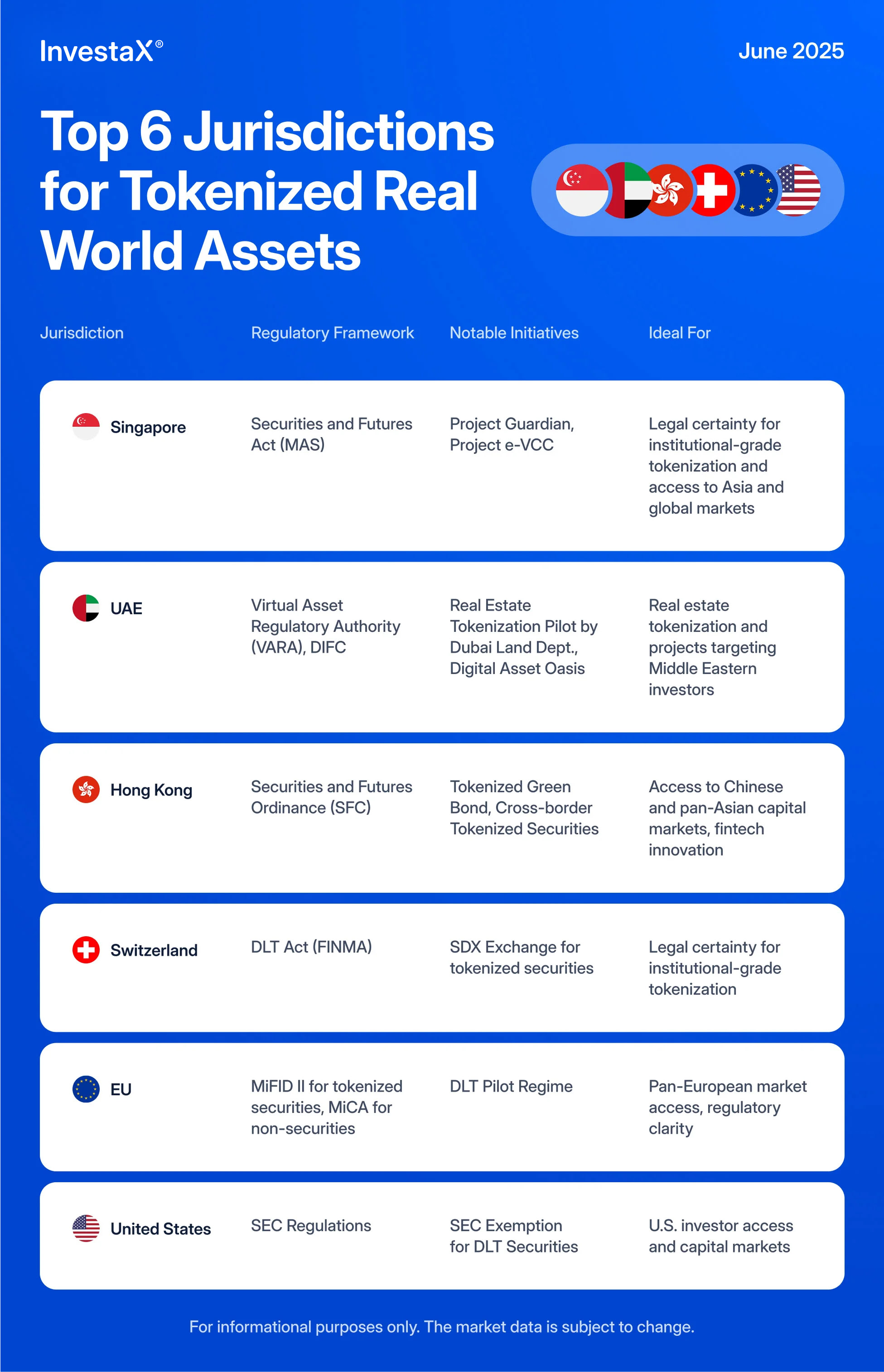
For a fuller comparison of how jurisdictions differ on these dimensions, see Leading Jurisdictions for Tokenized Real‑World Assets.
The High Bar is The Point
Singapore’s licensing regime for tokenized capital‑markets products is considered demanding, and that is what makes a Singapore licence valuable to the counterparties.
A platform that issues, distributes, and operates a market for tokenized securities in Singapore will typically be expected to hold licences under the Securities and Futures Act, such as a Capital Markets Services (CMS) licence and, where it operates a market, Recognised Market Operator (RMO) status. These are not light‑touch registrations. They carry capital requirements, compliance obligations, custody and AML standards, and ongoing MAS supervision.
MAS’s demanding posture extends across the digital‑asset space. Separately, under Part 9 of the Financial Services and Markets Act 2022 (FSMA), a Singapore‑based firm that provides certain digital token services and is not otherwise licensed under the Securities and Futures Act (SFA), Financial Advisers Act (FAA), or Payment Services Act may be required to be licensed as a Digital Token Service Provider. MAS has stated plainly that it “has set the bar high” and will generally decline such licences where it cannot effectively supervise the activity. Read the MAS announcement for details.
For a legitimate issuer, a strict regime works in their favour. A licence that is difficult to obtain can serve as a credential that investors, banks, and custodians may take into account as part of their own assessment. When a product is issued through a MAS‑licensed platform, a counterparty’s compliance team can treat the licensing as one piece of evidence that the operator has cleared a recognized supervisory bar. That can shorten parts of the diligence process, which in practice may influence how quickly an allocator can move within its internal timelines.
Regulation By Activity, Not By Technology
The second structural choice that matters to an issuer is how MAS treats the tokenized asset itself. Its revised Guide on the Tokenisation of Capital Markets Products holds that tokenizing a capital markets product does not change its underlying legal and economic substance: the same activity carries the same risk and the same regulatory outcome. A tokenized bond is regulated as a bond. A tokenized fund unit is regulated as a fund unit.
For a general counsel or head of digital assets, this removes the single biggest source of uncertainty in a tokenization decision. There is no separate, untested digital-asset regime to interpret, and no question of whether a familiar instrument will be treated as something new once it is put on-chain. The legal team can map a tokenized issuance onto the framework they already operate under, which is often what allows a deal to clear internal approval rather than stall in review.
This approach also places Singapore in line with where global regulation is heading. In November 2025, IOSCO’s Final Report on the tokenization of financial assets encouraged regulators worldwide to hold to the same “same activities, same risks, same regulatory outcomes” principle. Singapore is an early and consistent implementer of an emerging global consensus, which further lowers the risk that an issuer builds against a framework likely to diverge from international norms.
Vision, Experiment, And Execution Now Connect
What separates Singapore from jurisdictions that have made similar declarations is that the vision, the experimentation, and live execution now form a connected chain.
The vision is the decade-long framing, now anchored by the Future of Finance Institute as a permanent home for scaling AI and tokenization. The experimentation runs through a connected set of MAS initiatives, each building a different layer of the stack:
- Project Guardian (2022) develops the tokenized asset layer, with more than 40 institutions testing live use cases across foreign exchange, funds, and fixed income in six currencies, and producing reusable frameworks for tokenized funds and fixed income.
- Global Layer 1 (GL1) (2024) develops the interoperability layer, working on common settlement rules, data standards, and cross-network connectivity so tokenized assets can move across platforms and jurisdictions.
- BLOOM (2025) develops the settlement layer, enabling real-time, cross-border settlement of tokenized assets with finality.
- InvestaX contributed to this through the eVCC pilot alongside UBS Asset Management, State Street, and PwC, exploring blockchain-native fund issuance under Singapore's Variable Capital Company structure.
The execution is what an issuer should weigh most heavily, because it is evidence the framework works in practice and not only in controlled trials. Some notable tokenization projects issued under Singapore’s regulatory framework include:
- Franklin Templeton launched its OnChain U.S. Dollar Short-Term Money Market Fund on InvestaX under the VCC structure.
- Galactica's Pegasus program, distributed through InvestaX’s MAS-licensed tokenization platform, has taken real maritime credit through the full lifecycle. Pegasus 1, a US$25 million LNG vessel bridge financing, has closed and repaid in full. Pegasus 2 raised US$1.5 million from accredited investors over four weeks and is scheduled to complete repayment in August 2026.
- GetSolar launched GetSolar AssetCo Series 1, a tokenized senior secured loan backed by a portfolio of residential and commercial solar projects in Singapore and Malaysia.
The diversity of assets signals that Singapore’s framework is being applied across asset classes with different cash‑flow profiles, tenors, and investor bases. For an issuer, that breadth is a practical indicator that the jurisdiction can support a multi‑year tokenization program across different products. Deals that close and repay on schedule are the clearest available evidence that a jurisdiction’s framework is operational end to end.
What This Means For An Issuer Choosing Where To Tokenize
For an institution deciding where to bring a tokenized asset to market, the practical case for Singapore comes down to four things that compound.
- The regulatory treatment of the asset is predictable, which lets a legal team clear it internally.
- The licence functions as a diligence shortcut that makes counterparties and investors easier to bring on.
- The ecosystem has demonstrated repeat execution, so an issuer is not the first to test whether the framework holds.
- The regulator is building permanent infrastructure to scale tokenization further, which protects a multi‑year program against regulatory drift.
For issuers, that combination may be more valuable than regulatory permissiveness alone. The relevant question is not simply how quickly a tokenized product can be launched, but whether it can be structured, distributed, serviced, and supervised in a way that institutional investors and regulated counterparties can support.
None of this makes the underlying asset any stronger and it does not need to. A sound asset issued in a jurisdiction that de-risks everything around it, the legal treatment, the counterparty trust, the path to investors, is simply more likely to reach close. That is the specific advantage Singapore now offers. For a fuller comparison of how jurisdictions differ on these dimensions, see Leading Jurisdictions for Tokenized Real-World Assets.
How Issuers Can Get Started Tokenizing Under Singapore's Framework
In practice, an issuer engages this ecosystem through a licensed platform rather than with the regulator directly. That is where the licences, the compliance infrastructure, and the connection to the framework actually sit, and it is what lets an issuer focus on the asset while the regulatory and technical lifecycle is handled by a party built for it.
InvestaX holds Capital Markets Services and Recognised Market Operator licences from MAS, which allow it to support an asset across its full lifecycle, from issuance and distribution through to regulated secondary trading. For issuers exploring how a specific fund, credit deal, or other asset might be structured in Singapore, our operational walkthrough in How to Tokenize a Fund in Singapore covers the mechanics. For issuers looking for a licensed partner to issue tokenized assets under Singapore’s regulatory framework, contact us to discuss more details.
---
Disclaimer: This article is for informational and educational purposes only and does not constitute investment, legal, tax, or financial advice, or an offer or solicitation to buy any security or token. References to specific offerings, including Pegasus 1, Pegasus 2, and the Franklin Templeton OnChain U.S. Dollar Short-Term Money Market Fund, are provided as illustrative examples and are not recommendations. Any returns referenced are indicative and target figures only, are not guaranteed, and past performance is not necessarily indicative of future performance. Tokenized offerings involve risk, including possible loss of capital, and are typically available only to accredited, institutional, and expert investors who have completed the required due diligence. Regulatory descriptions reflect our understanding at the time of writing and should not be relied on as legal advice.
What licences does a tokenization platform need in Singapore?
It depends on the activities performed. A platform that facilitates the issuance and distribution of tokenized capital markets products and operates a market for their secondary trading like InvestaX would typically require a Capital Markets Services licence and Recognised Market Operator status from MAS. Obligations are assessed on the activity conducted rather than the underlying technology.
What does "same activity, same risk, same regulatory outcome" mean in practice?
It means tokenizing an asset does not change how it is regulated. MAS's revised Guide on the Tokenisation of Capital Markets Products holds that a tokenized capital markets product retains the same legal and economic substance as its conventional form, so a tokenized bond is regulated as a bond and a tokenized fund unit as a fund unit. For issuers, this removes the uncertainty of a separate digital-asset regime.
What is the Future of Finance Institute?
A standing body MAS announced on 25 June 2026, focused initially on AI and tokenization. It is designed to connect the financial and technology sectors and move both from experimentation toward broad-based deployment, giving Singapore's tokenization strategy a permanent institutional structure.
Can foreign issuers tokenize real-world assets in Singapore?
Foreign institutions commonly access the Singapore framework by working with a MAS-licensed platform, which provides the licensing, compliance, and distribution infrastructure. The regulatory treatment follows the activity and the structure used, such as issuance through Singapore’s Variable Capital Company, rather than the issuer's location.