In January 2026, Galactica completed the closing of Pegasus, a $25 million LNG vessel financing, issued and distributed through the MAS-licensed InvestaX platform. The transaction was supported by Kaia DLT Foundation and PT Pelayaran Korindo - two industry leaders bringing deep expertise to the shipping and digital asset space.
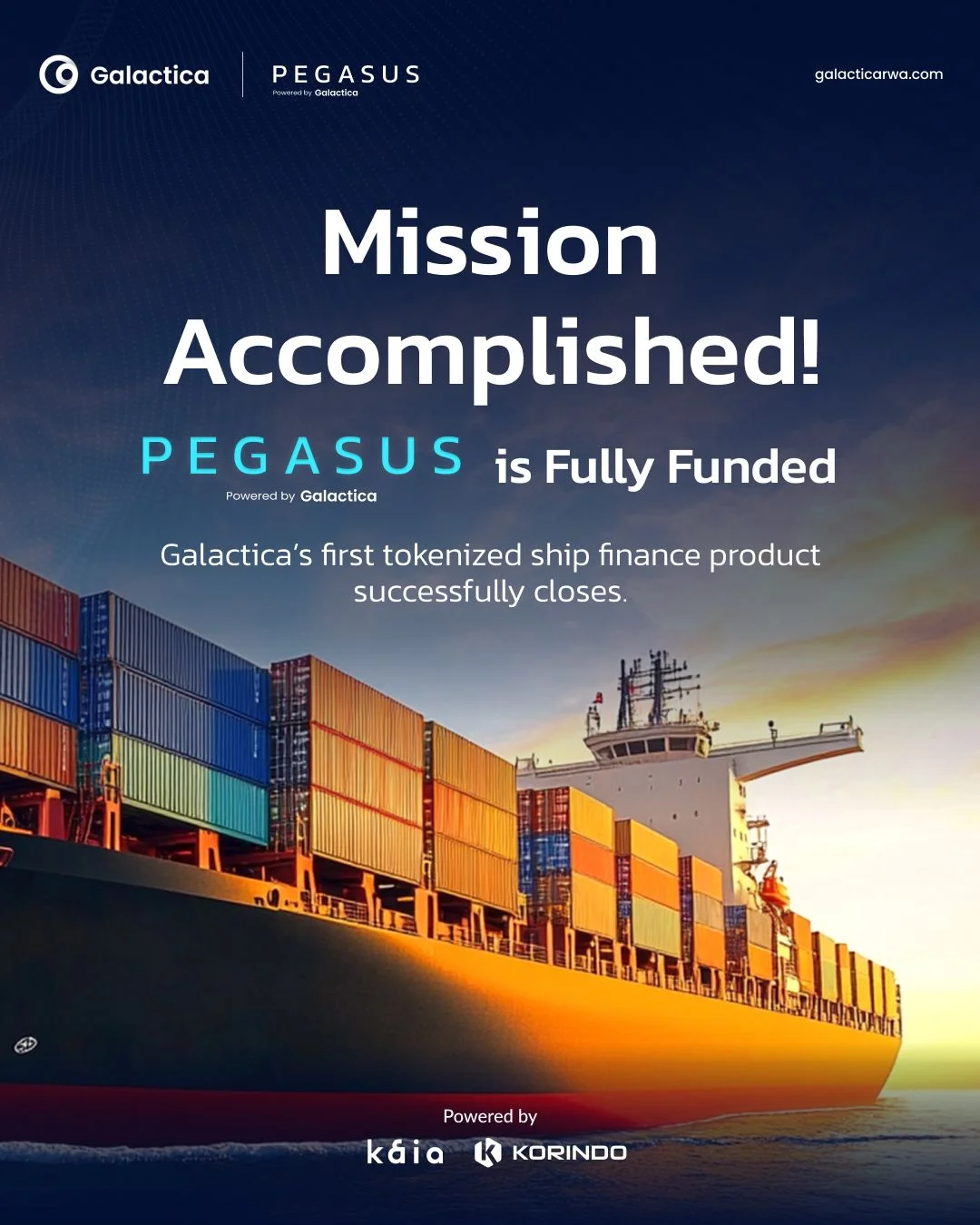
This is a practical example of tokenization applied in a live capital market context. It involved a real underlying asset with clearly defined use and revenue potential, structured through technology that operates within established legal parameters. The result was a completed transaction that connected institutional-grade maritime assets with qualified global investors through licensed infrastructure.
For institutions exploring tokenized real-world assets, the Pegasus transaction offers a reference point grounded in execution.
What the Pegasus Transaction Shows
Pegasus was structured as a bridge financing for a 145,000 CBM LNG vessel, supporting fleet modernization in Indonesia, one of the world’s largest maritime economies. Indonesia accounts for more than 10 percent of global registered vessels, yet ship financing remains constrained by long approval cycles, balance sheet limits, and limited access to non-bank capital.
Galactica approached this gap with a familiar financing logic, but a different issuance format. The underlying asset remained a physical vessel with clear commercial use. Cash flow characteristics followed established maritime finance principles. What changed was how access was structured and distributed.
The transaction was issued and distributed via InvestaX, a real world asset tokenization platform licensed by the Monetary Authority of Singapore (MAS). Kaia’s DLT infrastructure supported on-chain issuance, while investor eligibility, distribution controls, and compliance processes followed recognized regulatory requirements.
For market participants, Pegasus demonstrates how industrial-scale assets can move on-chain without departing from the structures institutions already understand.
Why Maritime Finance Highlights a Real Capital Gap
Maritime finance sits at the intersection of large capital needs and long asset lives. Vessels are expensive, essential, and slow to replace. Financing them often requires specialist lenders, detailed due diligence, and long lead times.
These characteristics make the sector reliable, but not always flexible.
Tokenization offers a potential way to introduce flexibility without altering the underlying economics. By fractionalizing exposure and enabling digital distribution, issuers may be able to access a broader pool of qualified capital. For investors, this can open access to assets that are typically difficult to participate in directly.
The Pegasus transaction illustrates this in practice. Qualified investors were able to gain exposure to a maritime asset through a structured, regulated framework, while the issuer accessed capital aligned with its operational timeline.
This is a complement to traditional maritime finance rather than a replacement for it, particularly where speed, access, and diversification matter.
Connecting Pegasus to the Broader Market
The Galactica deal is a significant entry into the tokenized private credit market - currently the largest and most active segment within the RWA ecosystem. According to recent data from RWA.xyz, tokenized private credit has grown to represent approximately USD 20 billion in value, accounting for more than half of the total USD 35B+ on-chain RWA market.
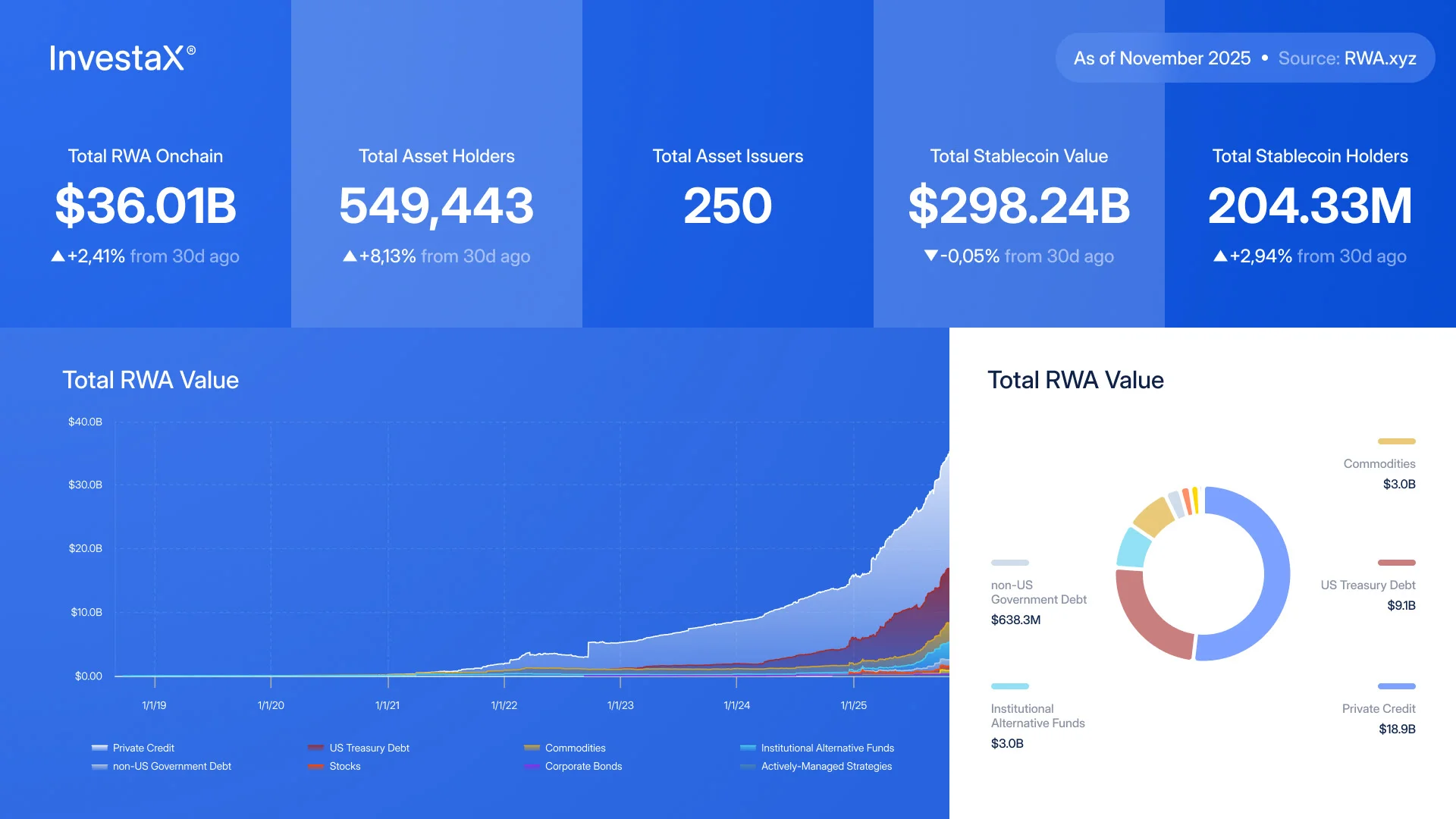
Positioned within the tokenized private credit segment, the Pegasus LNG vessel financing reflects how real-economy assets are increasingly moving on-chain. The transaction combined a defined financing requirement, a revenue-generating industrial asset, and regulated distribution to qualified investors. It illustrates how tokenization can be applied to private market deals without departing from established legal and operational frameworks.
What Pegasus Signals for Institutional Tokenization More Broadly
Several signals emerge from the Galactica transaction.
First, asset quality remains decisive. Industrial assets with clear ownership, operating history, and economic relevance tend to translate more effectively into tokenized formats.
Second, capital responds to clarity. Regulated issuance, transparent documentation, and credible counterparties appear to matter more than technical sophistication alone.
And third, tokenization increasingly looks like an extension of capital markets infrastructure. When deployed carefully, it operates alongside existing legal and financial frameworks instead of attempting to replace them.
As Julian Kwan, CEO of InvestaX, noted, the pace at which Pegasus closed reflects growing maturity in this segment of the market. When strong assets meet licensed, secure frameworks, participation tends to follow.
Looking Ahead: Industrial RWAs and Repeatable Structures
The successful closing of Pegasus points to a market that is maturing steadily, with tokenization becoming part of how businesses finance growth and how investors reach diversification.
Following the close, Galactica has indicated plans to expand its maritime RWA strategy, working with PT Pelayaran Korindo to identify additional assets suitable for tokenized financing. InvestaX is pleased to continue supporting Galactica as it expands its maritime RWA pipeline.
For regulated asset tokenization platforms like InvestaX, the role remains focused on providing compliant issuance and distribution infrastructure. The goal is to support how capital is raised, accessed, and managed in a digital format, while the underlying asset economics stay with the issuer and the market.